Drop-Off Catering vs Fully Serviced Catering: What’s Best for Your Corporate Event?
Drop-Off Catering vs Fully Serviced Catering: What’s Best for Your Corporate Event?
When people enquire about corporate catering, one of the biggest questions is often whether they actually need full service.
For some events, a beautifully prepared delivery arriving at the office is exactly the right solution. For others, trying to manage everything without chefs or front of house staff quickly becomes stressful, messy, and far less polished than expected.
The challenge is that most clients are not event professionals. They may only organise one or two larger corporate events each year, so understanding the difference between drop-off catering and fully serviced catering is not always straightforward.
At Salters Events, we provide both styles of catering across London, depending on what genuinely suits the event best. Sometimes that means a cold delivery arriving beautifully presented and ready for clients to lay out themselves. Other times, it means chefs onsite, front of house staff, drinks service, equipment hire and full event coordination.
The right option depends on your guest numbers, venue setup, timings, style of event and the overall experience you want to create.
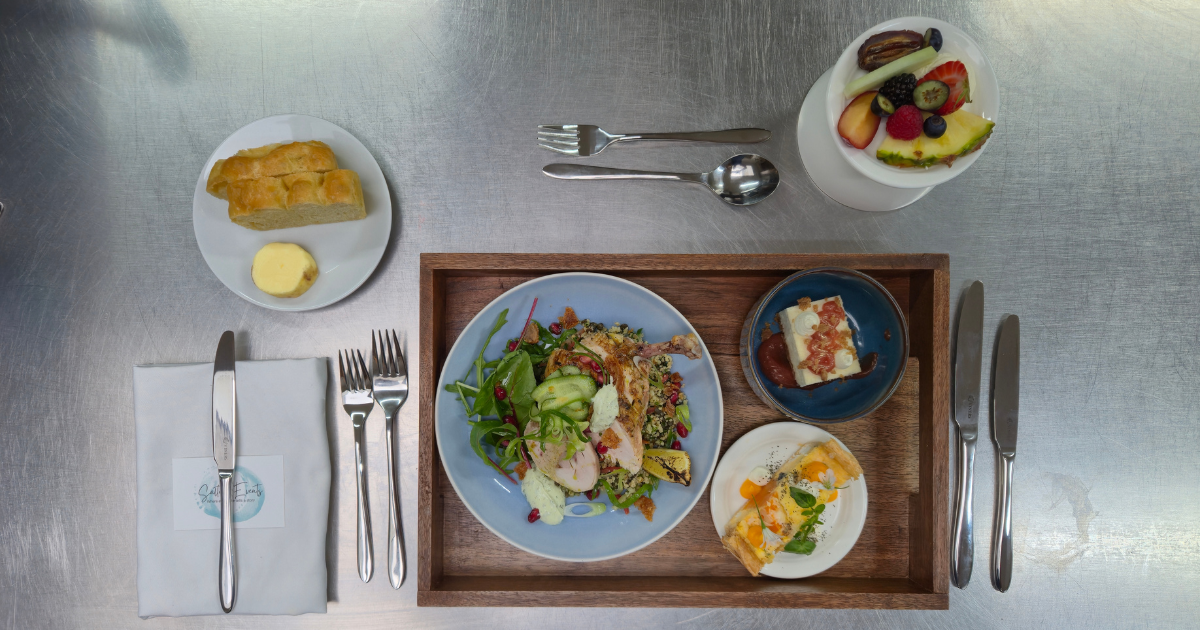
What Is Drop-Off Catering?
Drop-off catering is exactly what it sounds like. Your food is freshly prepared, delivered to your office or venue, and left ready for your team or guests to enjoy without ongoing staffing onsite.
At Salters Events, our drop-off catering is always cold delivery only.
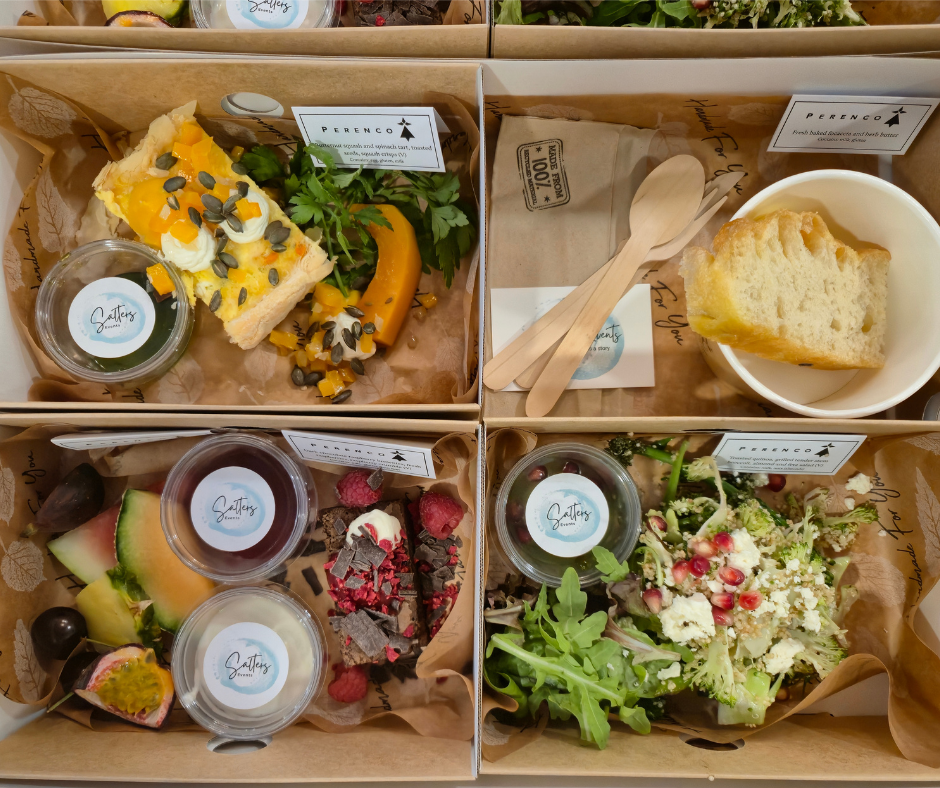
Orders are delivered fully presented in eco-disposable boxes and platters, making them practical for busy office environments while still maintaining a polished, premium feel.
This style of catering works particularly well for:
Office lunches
Team meetings
Training days
Working breakfasts
Informal daytime events
Internal company gatherings
Smaller networking lunches
For many businesses, this is the most practical and cost-effective option. You avoid staffing costs, equipment logistics and lengthy setup requirements while still providing freshly prepared, high-quality food for your guests.
For example, a deli lunch with artisan sandwiches, colourful seasonal salads and handmade sweet treats can work perfectly as a straightforward office delivery.
Our delivery-only catering does not include onsite setup or styling. Orders are delivered to the designated area, usually a reception space or kitchenette, and clients arrange any additional presentation themselves.
For many corporate environments, this works absolutely perfectly.
Why Drop-Off Catering Is Often More Affordable
One of the main reasons clients choose drop-off catering is cost.
Without chefs, front of house teams, bartenders, equipment hire and event coordination, the operational side of the event becomes significantly simpler.
There are fewer staffing hours involved, less equipment transportation and fewer logistical challenges overall.
For straightforward office lunches or daytime meetings, this often makes complete sense.
If guests are seated, helping themselves casually and returning to work afterwards, a cold delivery can be all that is needed.
That said, simpler does not always mean easier.
When Drop-Off Catering Stops Being the Right Fit
Drop-off catering works brilliantly for many office lunches and daytime corporate meetings, but there comes a point where a fully serviced event simply becomes the more appropriate option.
This usually happens when:
Guests are standing and mingling
Drinks service is required
Timing and pacing matter
Food needs replenishing throughout the event
Empty glasses and plates begin building up
The event is client-facing
The atmosphere needs to feel polished and seamless
At Salters Events, we do not offer hot food deliveries.
If clients would like hot food, chefs onsite, circulating canapés or active guest service, the event moves into fully serviced catering instead.
This is not simply about adding staffing costs. It is about protecting food quality and ensuring the event runs smoothly from start to finish.
Many London offices and venues are not designed for catering operations. We regularly encounter spaces with:
No usable kitchen facilities
Limited refrigeration
Restricted lift access
Tight delivery windows
Security check-ins
Minimal prep space
No suitable food holding equipment
Trying to run a more complex catering event without staffing and operational support can quickly become stressful for both clients and guests.
For this reason, some styles of catering are simply far better suited to a fully serviced event from the outset.
What Is Fully Serviced Catering?
Fully serviced catering involves a professional team managing the event experience throughout.
Depending on the event itself, this may include:
Chefs onsite
Front of house staff
Bartenders
Circulating canapé service
Setup and styling
Drinks service
Clearing and washing up
Equipment hire
Crockery and glassware
Linen and furniture hire
Event coordination
This style of catering is designed to create a seamless experience for guests while removing pressure from the client organising the event.
Instead of worrying about timings, replenishment, clearing or presentation, clients can focus on their guests and the purpose of the event itself.
Fully serviced catering is particularly valuable for:
Networking receptions
Corporate celebrations
Product launches
Press events
Awards evenings
Client hospitality
Board dinners
Evening receptions
VIP events
In these environments, service becomes part of the experience itself.
A strong front of house team helps control the pace of the event, maintain presentation standards, manage guest flow and ensure everything feels calm and polished throughout.
This is often the difference between an event feeling functional and feeling genuinely professional.
Why Fully Serviced Catering Costs More
One question we are often asked is why serviced catering costs significantly more than delivery-only catering.
The simple answer is labour, logistics and operational complexity.
A fully serviced event may involve:
Chefs arriving several hours before guests
Front of house teams preparing glassware and table settings
Equipment deliveries and collections
Setup and breakdown
Active guest service throughout the event
Ongoing food replenishment
Clearing and washing throughout service
In London especially, logistics can become a major part of event planning.
Parking restrictions, loading access, security procedures, lift bookings and venue limitations all impact staffing time and operational costs.
It is also important to remember that experienced event staff are highly skilled professionals. Good front of house teams do far more than simply serve food.
They help events flow properly, maintain presentation standards, resolve problems quietly and ensure guests feel looked after throughout the experience.
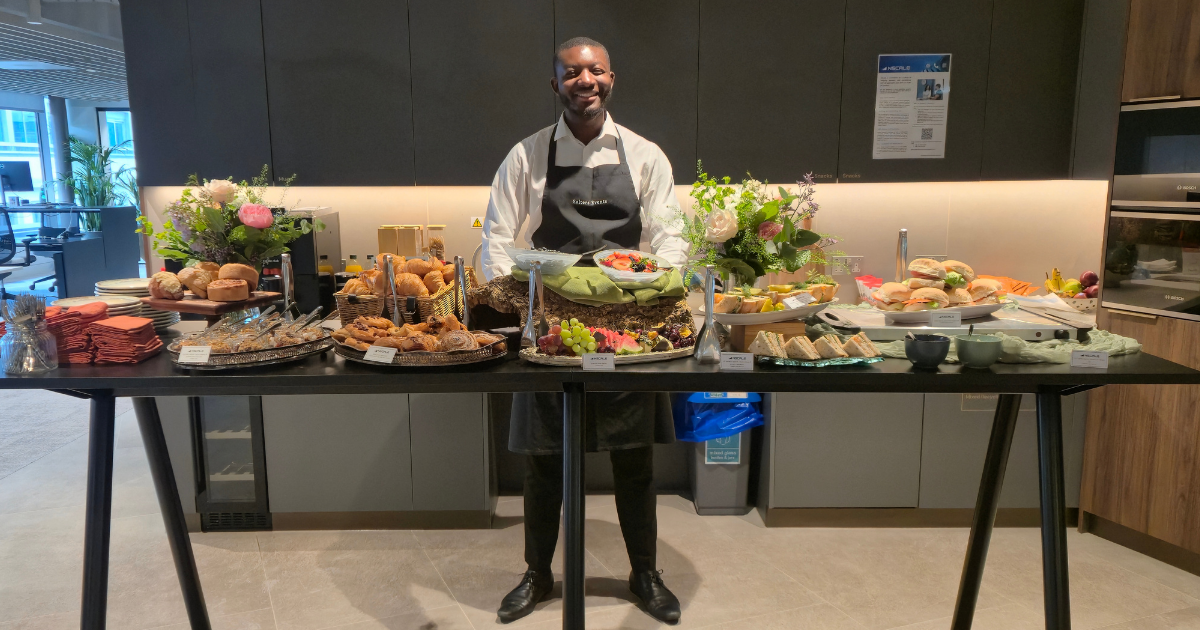
Which Events Usually Need Full Service?
While every event is different, there are certain styles of catering that almost always benefit from staffing support.
Canapé Receptions
Circulating canapés are designed to move naturally around the room. This keeps guests engaged, prevents overcrowding around food stations and creates a far more elegant atmosphere overall.
Drinks Receptions and Bars
If alcohol is being served, bartenders and glass collection quickly become essential for maintaining cleanliness and professionalism throughout the event.
Hot Food Service
At Salters Events, any hot food service becomes a fully serviced event with onsite staffing. This allows us to properly manage food quality, timing and guest experience.
Large Guest Numbers
As guest numbers increase, logistics become far more complicated. A lunch delivery for 12 guests is very different from a reception for 120 people.
Client-Facing Events
If you are hosting important clients, investors or senior leadership teams, the catering reflects directly on your business and brand presentation.
Service standards matter.
Questions Worth Asking Before You Decide
Before choosing between drop-off catering and fully serviced catering, it helps to think carefully about the practical realities of your event.
Some of the most important questions include:
Is there a usable kitchen onsite?
Many venues advertise “kitchen access” when they actually mean a sink and a domestic fridge.
How long does the event last?
A short lunchtime delivery is very different from a four-hour evening reception.
Are guests seated or standing?
Standing events almost always require more active service support.
Will drinks be served?
Drinks service often creates far more operational work than clients initially expect.
What impression are you trying to create?
Sometimes simplicity is exactly the right choice. Other times, investing in staffing and service transforms the entire atmosphere of the event.
What are the venue access restrictions?
Central London venues often involve loading bay bookings, security clearance, restricted lifts and strict delivery timings.
These details matter far more than most people realise.
If you are unsure which option is best, this is exactly where an experienced caterer should guide you honestly based on your event rather than simply trying to upsell unnecessary services.
You can also read our guide on how to get an accurate catering quote in London, which explains many of the logistical questions caterers ask before pricing an event.
If this is your first time organising a larger office event, our article on planning your first corporate event in London may also help.
And if budgeting is part of your planning process, we have also written a detailed guide to corporate catering costs in London.
Final Thoughts
There is no universal “better” option between drop-off catering and fully serviced catering.
The best choice is simply the one that genuinely suits your event.
Some of the most successful corporate events we cater are beautifully simple office deliveries for smaller daytime meetings. Others require chefs, bartenders, front of house teams and complex logistics management across multiple suppliers and venues.
The important thing is understanding what your event actually needs in order to run smoothly and leave the right impression on your guests.
Good catering should make hosting feel easier, not more stressful.
Planning an office lunch, networking reception or company event in London? We’d be happy to help you choose the right catering style for your event.
FAQs
-
Yes, in most cases. Drop-off catering removes staffing, equipment handling and ongoing service costs, making it the more affordable option for many office lunches and internal meetings.
-
No. At Salters Events, our drop-off catering is always cold delivery only. If clients would like hot food, chefs onsite or active guest service, we provide this as a fully serviced catered event instead.
-
No. Delivery-only catering is delivered fully presented in eco-disposable boxes and platters to the designated delivery area. Clients handle any additional setup or styling themselves.
-
Usually, yes. Circulating canapés are generally far more effective with front of house staff serving guests throughout the event.
-
There is no strict rule, but larger guest numbers, standing receptions, drinks service and client-facing events usually benefit significantly from staffing support.
-
This varies depending on the event, but may include chefs, front of house staff, bartenders, setup, clearing, equipment hire, crockery, glassware and event coordination.