How to Plan Catering for an All-Day Business Meeting in London
How to Plan Catering for an All-Day Business Meeting or Corporate Event
An all-day business meeting is a long time to keep people focused.
Whether you’re organising a board meeting, training day, strategy session, conference or company event, the catering can have a surprisingly big impact on how the day feels.
Too little food and people become distracted by hunger. Too much heavy food at lunchtime and the afternoon session can become an exercise in staying awake.
The best all-day meeting catering isn’t simply a collection of separate food deliveries. It should be planned as a complete day, with each break and meal working together.
So, what should you consider when planning catering for an all-day business meeting?
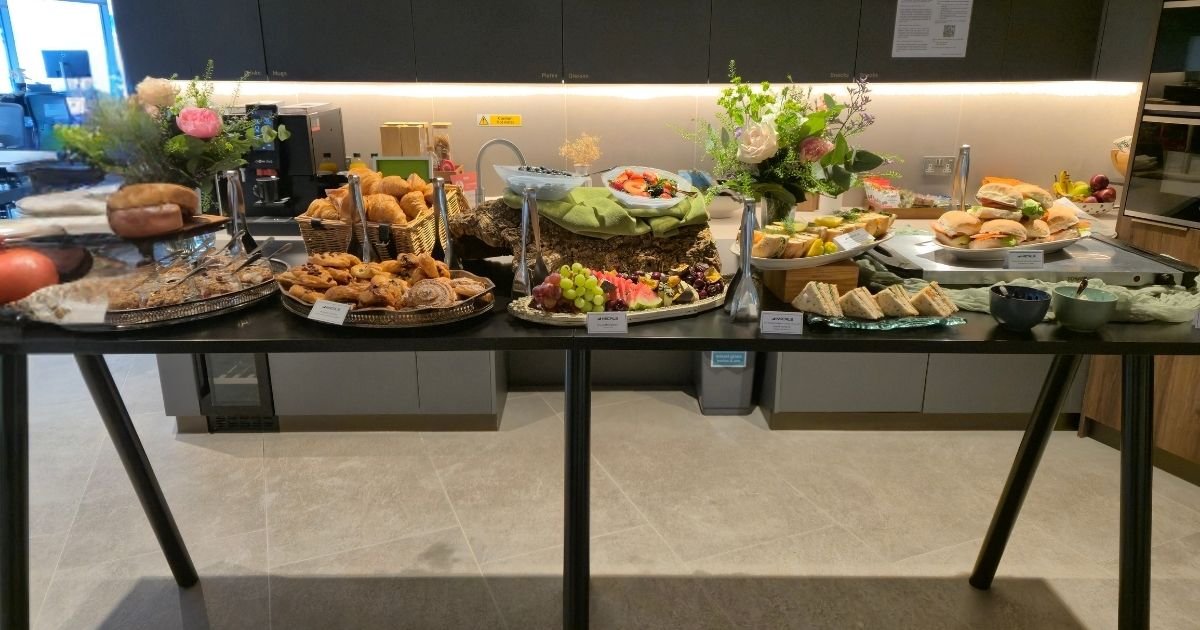
Start with the schedule, not the menu
Before deciding what to serve, look at how the day will actually run.
What time will guests arrive? When are the natural breaks in the agenda? How long is available for lunch? Will people be sitting in one room all day, moving between sessions or coming and going?
The catering should fit around the meeting rather than interrupt it.
For example, a breakfast served at 8am followed by a substantial lunch at 11:30am may be too much food too quickly. Equally, asking guests to wait until 1:30pm for lunch when they arrived at 8am with nothing but coffee is unlikely to help concentration.
Share the full schedule with your caterer. They can then help you plan when food should be served and how substantial each part of the day needs to be.
What food should you provide for an all-day meeting?
There is no single menu that works for every business event, but a full day might include:
breakfast or arrival refreshments;
a mid-morning refreshment break;
lunch;
an afternoon snack or something sweet;
tea, coffee, water and other drinks throughout the day.
That doesn’t mean guests need a full meal at every stage.
If you’re serving a substantial breakfast, the mid-morning break might simply need fresh fruit or a small baked item. If lunch is early, you may want something more substantial in the afternoon.
The important thing is to look at the whole day before deciding how much food to order.
Breakfast sets the tone for the day
For an early start, breakfast can be as simple as good pastries, fresh fruit and drinks, or something more substantial if guests have travelled a long way or the first session will run for several hours.
Think about how people will actually be eating.
If guests are arriving gradually, food that can be picked up easily works well. If everyone is expected to sit down together before the meeting begins, you may have more flexibility.
Breakfast also needs to account for dietary requirements. Providing one token piece of fruit for a vegan or gluten-free guest while everyone else has a table full of pastries is not an inclusive catering plan.
Dietary alternatives should feel like part of the menu, not an afterthought.
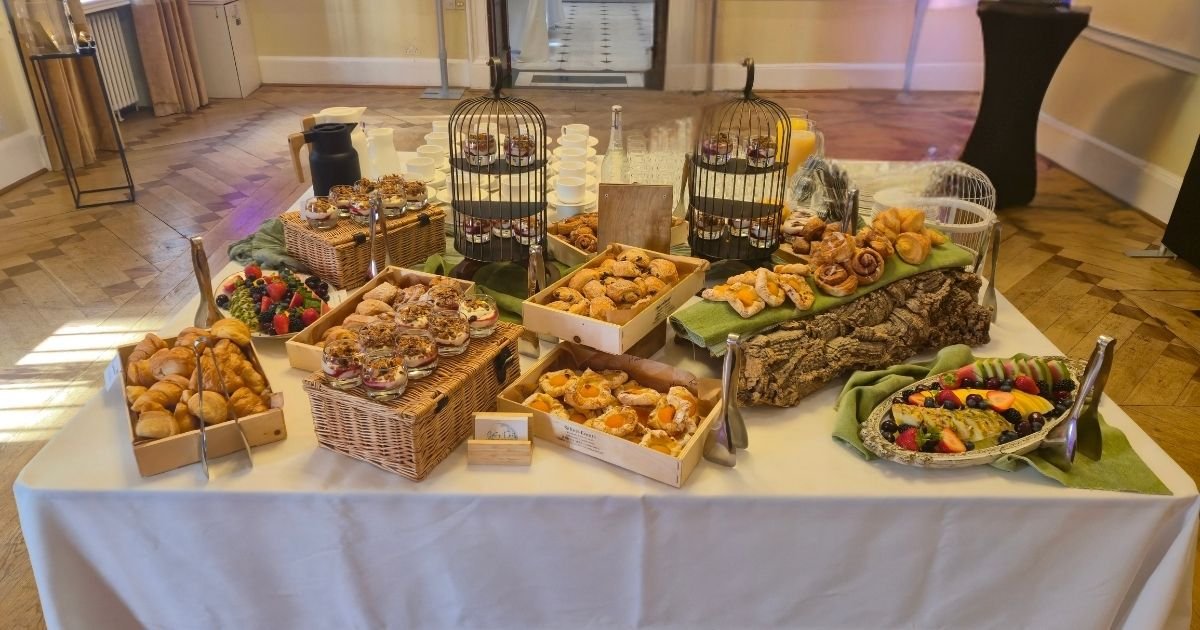
Plan lunch with the afternoon in mind
Lunch is often the largest meal of an all-day business event, but bigger is not always better.
A very heavy lunch followed by several more hours of presentations may not be the best combination.
For many meetings, a lunch with fresh salads, proteins, breads, tarts, quiches or other lighter dishes can provide plenty of variety without leaving guests feeling overly full.
The right format will depend on the event.
A board meeting may benefit from individual portions or a neatly presented lunch that causes minimal disruption. A larger team day might suit a buffet or sharing-style spread that encourages people to leave their seats and talk to colleagues.
The question isn’t simply “What should we serve for lunch?”
It’s “What does lunch need to do for this particular event?”
Don’t forget the afternoon
The afternoon is often where all-day meeting catering falls apart.
Breakfast has been eaten. Lunch has been cleared away. Then, at around 3pm, energy levels start to drop and there is nothing available except the biscuits that have been sitting beside the coffee machine since 9am.
A small afternoon refreshment can make a significant difference.
That might be fresh fruit, homemade cake, brownies or another small sweet treat. It doesn’t need to be another meal; it simply needs to make sense within the rest of the day.
If lunch included dessert, for example, you may not need another substantial sweet item an hour later.
Again, plan the day as a whole.
Tea and coffee need more thought than you might expect
“Tea and coffee throughout the day” sounds simple, but there are practical questions behind it.
Who will replenish it? Where will used cups and glasses go? Is there enough space for a drinks station? Does the venue have suitable power and water? Will milk and alternatives remain properly chilled?
For a small office meeting, the venue may already have everything required.
For a larger event or external venue, continuous refreshments may require staff to maintain the station, clear used items and replenish drinks throughout the day.
If you want refreshments available continuously, discuss how that will work in practice rather than assuming they can simply be delivered in the morning and look after themselves for eight hours.
A recent blog on serviced or drop off catering may be a useful read.
Water should always be readily available
This sounds obvious, but water is sometimes overlooked while organisers focus on coffee, juices and more exciting drinks.
Guests should be able to access water easily throughout the day without having to wait for a scheduled break.
Depending on the venue and style of event, that might mean bottled or canned water, jugs on tables or a dedicated drinks station.
The best option is the one that works practically for the space and keeps guests comfortably hydrated throughout the day.

Collect dietary requirements before the event
Dietary requirements become more complicated when you’re feeding people several times across one day.
A guest may need a suitable breakfast, lunch and afternoon snack — not simply one alternative dish at lunchtime.
Ask attendees for dietary requirements and food allergies in advance, and pass the information to your caterer as early as possible.
For serious allergies, provide clear and accurate information rather than simply describing someone as “allergic” without further detail.
Your caterer may need to discuss ingredients, preparation methods and cross-contamination risks with you before confirming what can safely be provided.
Think about where the food will go
An all-day catering plan can look perfect on paper and fail because nobody considered the space.
Before the event, establish:
where deliveries can be received;
where food can be stored before service;
whether refrigeration is available;
where catering can be set up;
whether there is access to water and power;
how used crockery or disposable packaging will be cleared;
whether the catering area needs to be reset between breaks.
If you’re using an external venue, don’t assume it has a fully equipped kitchen simply because it hosts events.
The facilities available can affect both the menu and the service required.
Should you choose delivered or staffed catering?
For some all-day meetings, a carefully timed delivery is all that’s needed.
For others, having catering staff on site can make the day run much more smoothly.
Staffed catering may be worth considering when:
refreshments need replenishing throughout the day;
food needs to be served at several different times;
the event has a larger number of guests;
the venue requires regular clearing and resetting;
you want the organiser to concentrate on the event rather than managing the catering.
The right option depends on the complexity of the day, not simply the number of guests.

Avoid ordering each part of the day in isolation
One of the biggest mistakes when planning all-day meeting catering is treating breakfast, lunch and afternoon refreshments as completely separate decisions.
The result can be too much food, repetitive menus or badly timed service.
Instead, consider:
What will guests have already eaten?
How long is it until they eat again?
How substantial does this particular break need to be?
What will help the day flow smoothly?
A good caterer should be able to look at the entire schedule and help you create a balanced plan.
All-day business meeting catering in London
At Salters Events, we provide bespoke corporate catering for business meetings and events across London.
We don’t require rigid contracts or ask every client to choose from one fixed package. Instead, we can help you plan catering around the number of guests, the venue, the schedule, dietary requirements and the way you want the day to run.
From breakfast and meeting lunches to afternoon refreshments and fully staffed corporate events, the aim is always the same: to make the catering feel like a seamless part of the day.
If you’re planning an all-day business meeting or corporate event in London, get in touch with Salters Events to discuss your requirements.
Frequently Asked Questions
-
An all-day business meeting may include breakfast or arrival refreshments, a mid-morning break, lunch and an afternoon snack, with water and other drinks available throughout the day. The exact amount of food should depend on the schedule, guest numbers and how substantial each meal will be.
-
A good business meeting lunch should be easy to serve and eat, appropriate for the schedule and suitable for the dietary requirements of the group. Salads, proteins, breads, tarts, quiches and other lighter dishes can work well when guests need to remain focused for an afternoon session.
-
This depends on the schedule, but guests should generally have access to water throughout the day, with food and refreshment breaks planned around the meeting agenda. Avoid long gaps between an early arrival and lunch.
-
Delivered catering can work well for straightforward meetings, while staffed catering may be more suitable when refreshments need continuous replenishment, several food services are planned or the venue requires regular clearing and resetting.
-
Booking as early as possible gives you the best choice of dates and more time to plan menus and dietary requirements. Larger, staffed or more complex events will generally require more notice than a straightforward catering delivery.